
Description
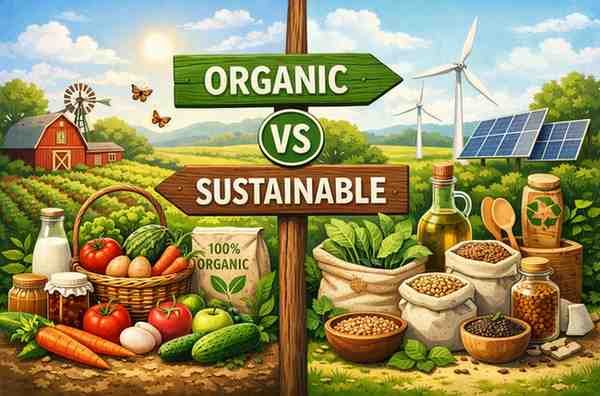
As consumers become more conscious about health, climate change, and ethical consumption, terms like organic foods and sustainable foods are appearing everywhere—from grocery labels to restaurant menus. While they are often used interchangeably, they are not the same. Understanding the difference between organic and sustainable foods helps you make informed choices that benefit both your health and the environment.
This article clearly explains organic vs sustainable foods, how they differ, where they overlap, and which option may be better for your lifestyle and values.
What Are Organic Foods?
Organic foods are produced according to specific agricultural standards that limit the use of synthetic chemicals and genetically modified organisms.
Key Features of Organic Foods
-
No synthetic pesticides or fertilizers
-
No genetically modified organisms (GMOs)
-
Restricted use of antibiotics and growth hormones
-
Certified by recognized organic authorities
Organic farming focuses primarily on soil health, chemical reduction, and food purity.
What Are Sustainable Foods?
Sustainable foods are produced using methods that protect the environment, support communities, and ensure long-term food security.
Key Features of Sustainable Foods
-
Efficient use of water and energy
-
Reduced carbon footprint
-
Ethical labor and fair trade practices
-
Animal welfare considerations
-
Long-term environmental and economic viability
Sustainability looks beyond farming methods to consider the entire food system.
Organic vs Sustainable Foods: Core Differences
| Aspect | Organic Foods | Sustainable Foods |
|---|---|---|
| Primary Focus | Chemical-free production | Long-term environmental balance |
| Certification | Official organic certification required | May or may not be formally certified |
| GMOs | Not allowed | May be allowed if environmentally beneficial |
| Pesticides | Natural alternatives only | Reduced and optimized use |
| Scope | Farm-level practices | Farm-to-fork lifecycle |
Are Organic Foods Always Sustainable?
Not necessarily. While organic farming reduces chemical use, organic foods are not automatically sustainable.
Example:
-
Organic produce transported long distances increases carbon emissions
-
Organic farming may use more land to achieve similar yields
Sustainability evaluates broader environmental impacts beyond farming methods alone.
Can Sustainable Foods Be Non-Organic?
Yes. Some sustainable farms may use limited modern technology or targeted chemical inputs to conserve water, reduce emissions, or improve crop yields efficiently.
These practices may not meet organic certification standards but still achieve strong environmental outcomes.
Health Differences: Organic vs Sustainable Foods
Organic Foods
-
Lower pesticide residue
-
Popular among health-conscious consumers
-
Strict production controls
Sustainable Foods
-
Focus on ecosystem balance and food quality
-
Often locally sourced and fresher
-
May include organic and non-organic options
Both can be healthy choices depending on sourcing and production methods.
Environmental Impact Comparison
Organic Farming Benefits
-
Improves soil fertility
-
Protects biodiversity
-
Reduces chemical runoff
Sustainable Farming Benefits
-
Lowers greenhouse gas emissions
-
Conserves water and energy
-
Supports climate-resilient agriculture
Sustainability addresses broader climate and resource challenges.
Cost and Accessibility
Organic foods often cost more due to:
-
Certification expenses
-
Labor-intensive farming methods
-
Lower yields
Sustainable foods can be more affordable when sourced locally and seasonally, even if they are not certified organic.
How to Choose Between Organic and Sustainable Foods
Rather than choosing one exclusively, consider a balanced approach:
Practical Buying Tips
-
Buy organic for high-pesticide produce
-
Choose local and seasonal foods for sustainability
-
Look for transparency from producers
-
Reduce food waste and overconsumption
Smart choices combine the benefits of both organic and sustainable practices.
Certifications and Labels to Look For
Understanding labels can help avoid confusion:
-
Organic certification labels
-
Fair trade and ethical sourcing marks
-
Eco-friendly and sustainability claims with transparency
Always verify what a label truly represents.
Which Is Better: Organic or Sustainable Foods?
There is no universal answer. The better choice depends on your priorities:
-
Choose organic if avoiding chemicals is your main concern
-
Choose sustainable if reducing environmental impact is your goal
In many cases, the best option is food that is both organic and sustainably produced.
Summary
The debate between organic vs sustainable foods highlights an important truth: food choices are complex, and no single label tells the whole story. Organic foods focus on how food is grown, while sustainable foods consider the long-term impact of the entire food system.
By understanding the difference, consumers can make thoughtful decisions that support personal health, environmental protection, and a more resilient food future.
Reviews
There are no reviews yet.